- Architectural Contractor Knowledgebase
Raleigh Roof Repair FAQs
Direct, contractor-verified answers to common questions about residential roof repair costs, insurance claims, City of Raleigh permits, 24/7 emergency dispatch, roofer licensing, and material lifespans across Wake County, NC.
Cost & Upfront Pricing
Honest line-item benchmarks based on Wake County residential building averages.
How much does a typical roof leak repair cost in Raleigh?
In the Raleigh metro area, common isolated leak repairs typically range between $275 and $850. This standard pricing covers straightforward issues such as cracking pipe boot collars, degraded soil stack neoprene collars, or displaced valley shingles. More complex repairs involving rotted plywood decking or re-flashing stepped dormer walls can range from $900 to $1,500.
Do you charge an upfront inspection fee in Wake County?
We do not charge homeowners an upfront assessment fee for standard residential repair estimates, roof condition evaluations, or post-storm hail assessments in Raleigh, Cary, and Wake County. You receive a complete photographic roof health evaluation detailing damaged planes and shingle conditions at zero obligation.
When is it cheaper to repair a roof rather than replace it?
A surgical repair is strongly recommended whenever localized damage affects less than 20% to 25% of the total roofing surface, provided the surrounding architectural shingles are under 15 years old and retain good granule adhesion. Conversely, when widespread granular fatigue or multiple unsealed valleys occur on roofs over 20 years old, ongoing piecemeal repairs become cost-inefficient compared to complete tear-off.
What factors can increase the cost of a roof repair?
Key factors that escalate repair costs include steep roof pitches exceeding 7:12 (requiring OSHA anchor systems and safety ropes), multi-story staging, chimney saddle refabrication, and hidden sub-deck dry rot that requires replacing CDX plywood sheets. Historic architectural profiles or non-standard valley configurations also require custom metal fabrication.
Do you offer financing or payment plans for emergency repairs?
Yes. We provide verified homeowner financing options including 0% APR promotional plans for 12 months, as well as extended fixed-rate terms through FDIC-insured lending partners. We also partner with local community housing initiatives in Wake County to assist seniors and low-income property owners facing sudden structural water damage.
How does drip edge installation affect total repair costs?
Retrofitting perimeter metal drip edge along roof eaves and rakes typically costs between $1.50 and $3.50 per linear foot, depending on the shingle overlap condition and fascia clearance. Installing proper drip edge protects fascia boards against capillary water draw and ensures total compliance with current North Carolina residential building codes.
Insurance Claims & Storm Damage
Navigating Raleigh hailstorms, high-wind events, and NC insurance adjuster protocols.
How do I know if storm damage warrants an insurance claim?
An insurance claim is typically warranted when hail impacts bruise through the fiberglass substrate or when sustained wind speeds exceed 50 mph, lifting or creasing entire rows of shingle tabs. Our technicians mark out 100-sq-ft test squares with chalk and prepare high-resolution macro photography for your insurance adjuster before you ever open a claim.
Does homeowners insurance cover a tree that fell on my roof?
Yes. Standard North Carolina HO-3 homeowner insurance policies cover sudden and accidental damage caused by fallen trees or large limb impacts. Coverage typically includes professional crane debris removal, 24/7 industrial tarping to prevent water intrusion, and full structural truss and decking restoration.
Will filing a roof repair claim raise my North Carolina insurance rates?
In North Carolina, rate adjustments resulting from weather catastrophes are regulated by the NC Department of Insurance and calculated based on regional meteorological territories rather than individual "Act of God" filings. However, multiple claims on a single property within a consecutive 3-year window can impact your policy renewal standing.
What is the difference between RCV and ACV in my adjuster statement?
Actual Cash Value (ACV) is the initial insurance payout reflecting the current market value of your aged shingles minus physical depreciation. Replacement Cost Value (RCV) represents the total cost to perform complete code-compliant repairs; the withheld depreciation amount is reimbursed to you once we submit certificate-of-completion documentation.
Can a roofing contractor waive or absorb my insurance deductible?
No. Waiving, rebating, or absorbing an insurance deductible is illegal under North Carolina insurance fraud statutes. Any roofing contractor who advertises "free roofs" or promises to absorb your deductible is committing a felony and putting your insurance settlement and home warranty coverage at direct legal risk.
What is an IBHS FORTIFIED Roof and does it qualify for NC discounts?
An IBHS FORTIFIED Roof is an engineered standard utilizing ring-shank nails, sealed roof deck seams, and impact-rated architectural shingles designed to withstand severe winds. Many North Carolina home insurance underwriters provide annual wind premium discounts of up to 25% for homes certified to IBHS standards.
Raleigh Permits & Building Code
City of Raleigh Inspections, Wake County code enforcement, and historic overlay rules.
Do I need a municipal building permit to repair my roof in Raleigh?
Under NC General Statute § 160D-1110 and City of Raleigh Development Services regulations, isolated roofing repairs valued below $20,000 that do not involve structural load-bearing rafters or truss re-framing do not require a trade permit. However, full structural re-decking or total replacement scopes do require municipal building permits, which our licensed general contractor team handles end-to-end.
Does NC Building Code mandate drip edge on older homes?
Yes. The current North Carolina Residential Code (NCRC R905.2.8.5) explicitly requires corrosion-resistant metal drip edge installed at eaves and gables on all re-roofing and extensive fascia-line roof repairs. When performing targeted repairs along the eaves, we install conforming metal profiles overlapping at least 2 inches to guarantee code compliance.
What are the roofing rules for Raleigh historic districts like Oakwood or Boylan Heights?
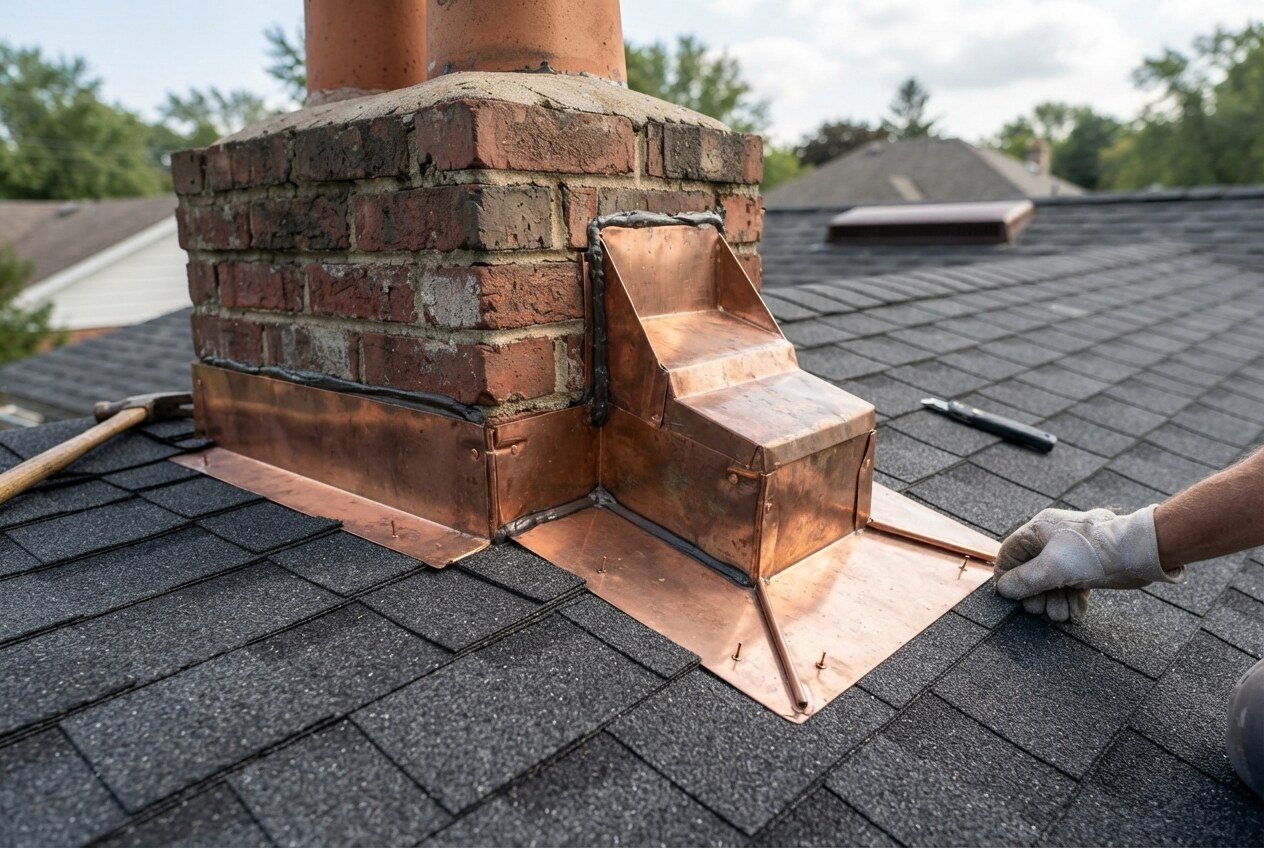
In Raleigh Historic Overlay Districts (such as Historic Oakwood, Boylan Heights, and Blount Street), exterior roof modifications require a Certificate of Appropriateness (COA) from the Raleigh Historic Development Commission (RHDC). However, like-for-like spot repairs using identical materials (e.g. natural slate replacement or soldered copper flashing) qualify for fast-track administrative exemptions.
How many layers of shingles are permitted by Wake County building code?
North Carolina building codes permit a maximum of two layers of asphalt shingles on residential roof structures. However, our trade practice strongly advises against adding a second "layover" layer because it traps heat in Raleigh summers, conceals underlying plywood rot, and automatically voids shingle manufacturer wind warranties.
What ventilation standards are enforced for Wake County attics?
Wake County strictly enforces the 1:300 ventilation rule (NCRC R806.2), requiring 1 square foot of net free ventilating area for every 300 square feet of attic floor space, balanced equally between soffit intake and ridge exhaust. Inadequate ventilation traps attic humidity, leading to condensation rot beneath the plywood decking.
Are metal roofs approved in Wake County residential zones?
Yes. Metal roofing systems—including concealed-fastener standing seam and 5V crimp profiles—are fully approved under Wake County and City of Raleigh unified development ordinances. While fully approved by the city, individual Homeowner Association (HOA) covenants in master-planned communities like Brier Creek or Wakefield often mandate specific shingle colors or panel finishes.
Emergency Repairs & Active Leaks
Rapid water stoppage, emergency containment, and same-day Wake County response.
How quickly can an emergency repair crew arrive at my home?
Our dedicated rapid dispatch service trucks maintain an average arrival window of 45 to 75 minutes across Raleigh, Cary, North Hills, and apex communities. We operate fully equipped mobile field vehicles carrying heavy-duty 20-mil tarps, temporary structural supports, lumber, and sealants to stop interior water intrusion immediately.
What should I do right now while waiting for the roofer to arrive?
First, clear valuable furniture and place a heavy bucket beneath the active water drip. If your ceiling drywall is bubbling or sagging with pooled water, take a screwdriver or pencil and pierce a small relief hole in the center to drain the reservoir cleanly and prevent a widespread ceiling collapse.
Can a roof be repaired while it is actively raining?
Yes, temporary emergency containment can be performed in active rainfall using specialized water-diverting fasteners, 20-mil industrial poly-tarps, and wet-surface elastomeric sealants. However, permanent asphalt shingle nailing and flashing mastic must wait until the underlying decking substrate is completely dry to guarantee proper bonding.
What is the most common cause of sudden roof leaks in Raleigh?
In the Triangle region, over 65% of sudden residential leaks originate around plumbing vent pipe collars where ultraviolet sunlight dry-rots the neoprene rubber boot, creating a 1/4-inch ring through which rain pours directly into the attic. Rusted chimney step-flashing and clogged hidden roof valley channels are the second and third most prevalent leak sources.
Do you charge emergency dispatch premiums on weekends or holidays?
We provide completely transparent, flat-rate emergency triage fees with zero hidden night or holiday surcharges quoted over the phone before our truck rolls. Our emergency dispatch fee covers complete safety rigging, ladder ascent, and initial water containment tarping up to 400 square feet.
How do you locate a roof leak when water enters far from the stain?
Roof leaks rarely drip straight down; water frequently enters at a high ridge vent or chimney, travels 15 feet down a rafter chord, and only enters ceiling drywall when it strikes a joint or nail plate. Our technicians utilize calibrated thermal imaging cameras, pinless moisture meters, and 21-point attic rafter tracking to pinpoint exact structural penetration points.
Choosing a Roofer & NC Licensing
North Carolina licensing laws, trade qualifications, and avoiding unlicensed contractors.
How can I verify if a roofer is legally licensed in North Carolina?
You can verify any roofing contractor's credentials directly through the North Carolina Licensing Board for General Contractors (NCLBGC) public search portal at nclbgc.org. Our company holds active, unrestricted General Contractor License #NC-GC-78421 with both Residential and Commercial Building classifications.
What insurance coverage should my roofing contractor carry?
A legitimate roofing contractor must carry a minimum of $1,000,000 to $2,000,000 in Commercial General Liability insurance plus comprehensive North Carolina statutory Workers' Compensation insurance for every technician on your roof. Without workers' compensation, a homeowner can be held directly liable for injuries sustained by an uninsured crew on their property.
How do I spot an out-of-state "storm chaser" scammer?
Red flags include out-of-state license plates on unmarked vehicles, unsolicited door-to-door salesmen demanding immediate contract signatures, requests for full cash payments upfront, and an inability to provide a local North Carolina physical office or active NCLBGC license number. Storm chasers quickly exit the state once insurance checks clear, leaving homeowners with no warranty recourse.
What warranties are provided on repair work versus replacements?
All surgical leak repairs completed by our crews include an ironclad 2-year to 5-year written leak-free workmanship warranty backed directly by our licensed company entity. Full replacements feature 25-year to 50-year non-prorated manufacturer system warranties (GAF Golden Pledge or CertainTeed SureStart) covering materials, tear-off, and disposal.
What questions should I ask before signing any roofing contract?
Always demand four specific items in writing: (1) Their active North Carolina General Contractor license number, (2) Current certificate of insurance delivered directly from their insurance agency, (3) An itemized scope of work separating shingle brand, underlayment type, and flashing metal, and (4) Clear lien waiver terms upon final payment completion.
Can a handyman fix my roof, or must I hire a roofing contractor?
While minor cosmetic tasks under $40,000 can legally be performed by non-licensed handymen under NC statutes, untrained workers frequently use cheap silicone caulk over corroded flashing or high-nail shingles, which completely voids the manufacturer's wind warranties. Licensed roofing contractors guarantee architectural code compliance and durable flashing integration.
Materials, Shingles & Durability
Piedmont climate resilience, architectural shingle lifespans, and metal systems.
How long does an architectural shingle roof last in North Carolina?
In Raleigh's climate—characterized by intense summer ultraviolet exposure, heavy thermal expansion cycling, and high relative humidity—standard architectural laminate shingles typically deliver an effective lifespan of 18 to 24 years, despite 30-year marketing claims. Older 3-tab asphalt shingles generally degrade after only 12 to 15 years.
Can you match obsolete or discontinued asphalt shingles during a repair?
Yes. We utilize laboratory ITEL physical shingle matching analysis to identify obsolete product profiles and granular blends. When an exact match has been permanently discontinued by manufacturers like Owens Corning or CertainTeed, we source compatible color-matched architectural lines or harvest non-visible shingles from ridge runs to ensure front curb-appeal consistency.
Are black algae streaks harmful to my roof shingles?
The unsightly black discoloration common on north-facing Raleigh roofs is caused by Gloeocapsa magma airborne blue-green algae. While the discoloration is primarily aesthetic initially, the algae feeds on the calcium carbonate limestone filler within asphalt shingles, eventually accelerating surface granule detachment and shortening shingle life.
Is standing seam metal roofing worth the higher upfront investment?
Yes, for long-term homeowners. Standing seam metal roofing offers an expected lifespan of 50+ years, Class 4 impact resistance, and up to 140 mph wind uplift protection. In addition, high-reflectivity Kynar 500 ceramic coatings reflect solar radiant heat, lowering Raleigh attic cooling bills by up to 20% to 25% during summer months.
What roofing materials work best on low-slope porches and sunrooms?
Asphalt shingles cannot be installed on roof pitches below 2:12 because slow-draining water will back up under the laps. For low-slope Raleigh sunrooms, porches, and modern extensions, we install single-ply 60-mil heat-welded white TPO membranes or 2-ply self-adhered SBS modified bitumen systems with heat-fused watertight seams.
What should I do to prepare my roof before Atlantic hurricane season?
Before hurricane season (June 1 through November 30), homeowners should trim all overhanging loblolly pine limbs within 10 feet of the roofline, clean all gutters and downspout conductors, check pipe boot collars for rubber cracking, and schedule a 21-point roof inspection to fasten any unbonded shingles that high winds could strip.
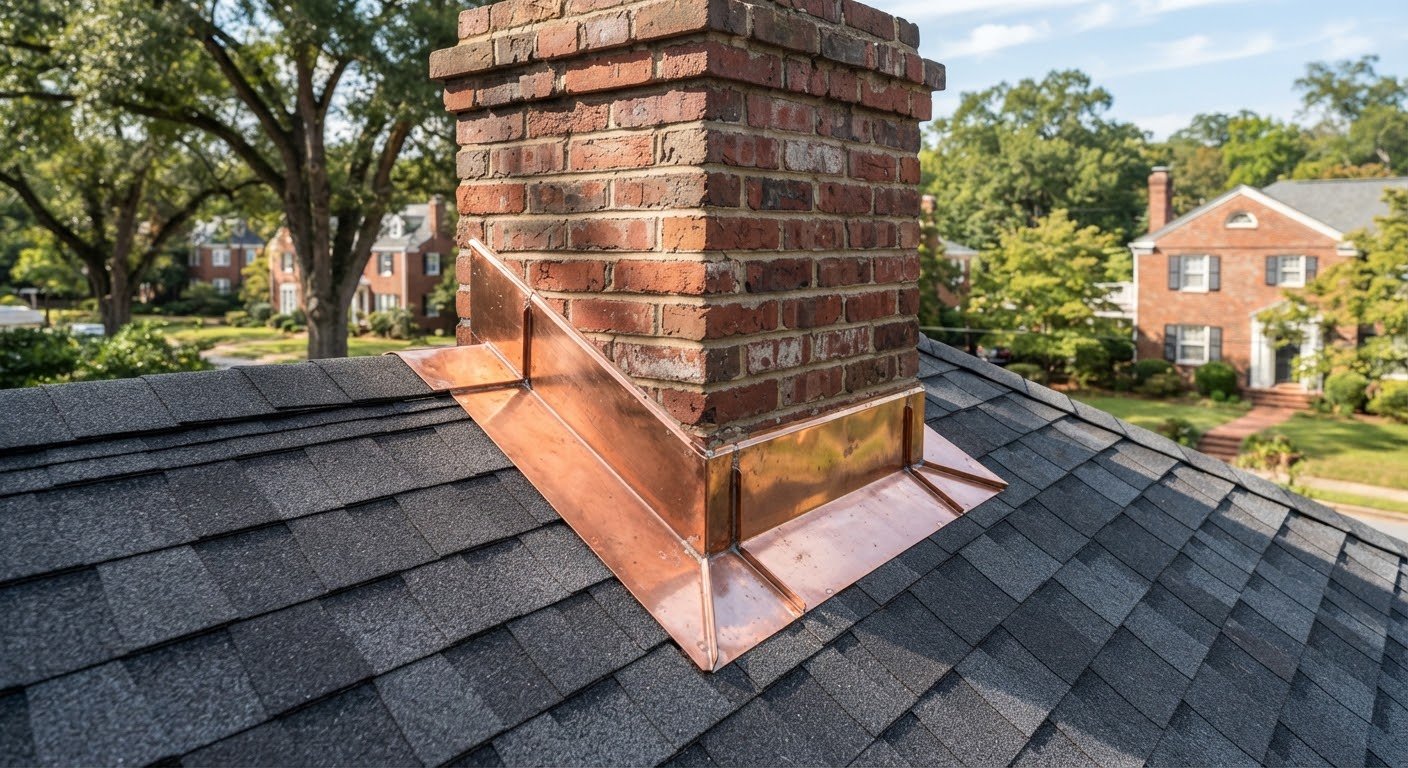
Architectural Copper Saddle Retrofit
Eliminated recurrent valley intrusion using custom 16-oz soldered copper counter-flashing grooved into mortar joints.
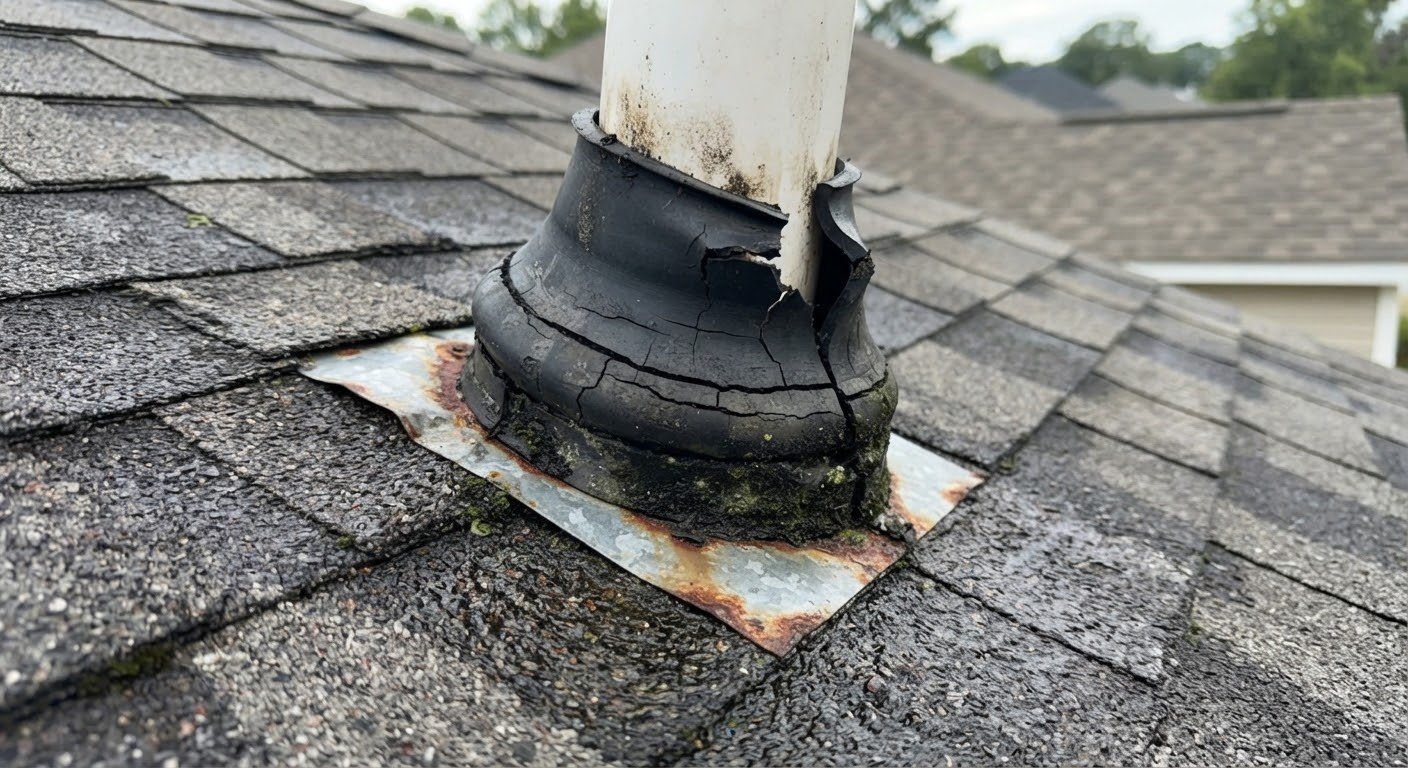
Neoprene Collar Failure
Standard Neoprene boots fail after 7–10 years under Carolina sun. We replace them with lifetime silicone collar jackets.
NC Residential Code R905.2.8.5 Requirement
Drip edge metal is legally mandated on all eaves and rake edges for residential re-roofing across Wake County. Ensure your repair estimate explicitly specifies 26-gauge corrosion-resistant edge metal.
Rapid Tarping Dispatch Units:
4 Trucks stationed between Midtown, North Hills, Cary, and Wake Forest.
- Direct Estimator Access
Need a Specific Answer for Your Roof?
Every roof framing structure in Wake County has unique architectural subtleties—from mid-century tongue-and-groove decking in Oakwood to modern high-pitch trusses in Brier Creek.
Talk directly with our licensed NC general contractor team for honest technical assessments with zero sales pressure.
Ask Our Master Roofer
Submit your question below. We respond with factual technical guidance within 2 business hours.
Wake County Coverage Zones
Our rapid field fleet serves all residential neighborhoods, historic districts, and commercial zones across Wake County with code-compliant diagnostic repairs.
Roof Leaking or Have Questions About Repair Costs?
Our licensed Raleigh roofing technicians provide clear photographic diagnoses and upfront, fixed-price repair estimates before any work begins.