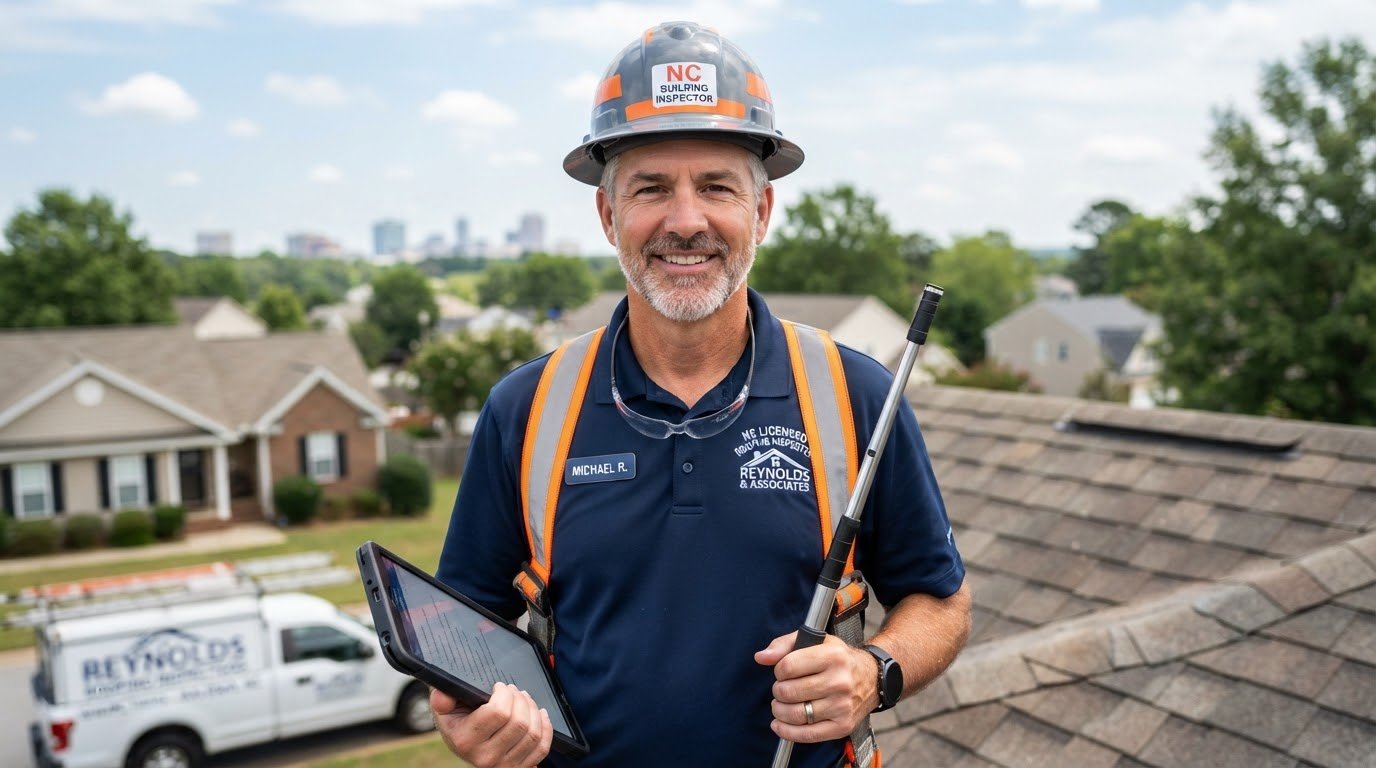
The 25–30% Threshold: How Wake County Roofers Calculate Feasibility
When roofers inspect homes in North Hills, Cary, or Apex, the first mathematical filter applied is the 25–30% surface threshold. Both building code administrators and major insurance adjusters operating in Wake County reference this benchmark when deciding whether an isolated repair remains structurally feasible or triggers a full roof tear-off.
Under Chapter 9 of the North Carolina Residential Code (NCRC R908), reroofing regulations mandate that if more than 25 percent of the roof covering of a single structure or townhouse is removed, torn off, or damaged within any 12-month period, the entire roof assembly slope must be brought up to modern building code standards. Beyond regulatory mandates, three structural conditions determine if a repair will hold:
Contiguous Square Footage
If storm bruising or shingle blow-off spans across roof hips and valleys, piecemeal patches create failure points along water channeling paths.
Discontinued Profiles
Discontinued shingles (such as older CertainTeed Horizon or discontinued organic 3-tabs) cannot be interlocked cleanly with modern architectural stock without breaking surrounding seals.
Thermal Embrittlement
In Central NC, prolonged 95°F summer heat dries out asphalt volatiles. If surrounding shingles snap like saltines when gently lifted to slide in new nails, repairs do more harm than good.
Repair vs. Replace Decision Matrix
Use this engineering rubric to match your roof’s current visual symptoms with our recommended course of action based on hundreds of verified Wake County forensic roof inspections.
Roof-Age Band Graphic & Lifespan Analysis
Every roof passes through distinct physical phases. Due to North Carolina’s high relative humidity and rapid seasonal temperature oscillations (from freezing winter nights to 140°F attic superheating in July), roofing lifespans in Wake County cluster into three distinct operational bands:
Band 1: 0–10 Years (Surgical Repair Zone)
In this stage, your shingle asphalt retains high pliability, granules remain deeply embedded, and manufacturer warranties are active. Leaks occurring here are almost universally penetration-specific rather than field shingle failures.
Band 2: 10–20 Years (The Evaluation Zone)
This is where Raleigh roofs face critical inflection. Repeated thermal expansion has weakened the seal strips, asphalt volatiles have dissipated, and minor hail marks fail to bounce back. A simple flashing fix is sensible; however, widespread repairs risk triggering adjacent shingle tears.
Band 3: 20+ Years (Full Replacement Zone)
Architectural shingles in the Triangle rarely provide reliable weather defense past 22 years. The fiberglass matting is fully brittle, organic underlayment felt is petrified, and roofer foot-traffic during a repair often generates fresh leaks on adjacent courses.
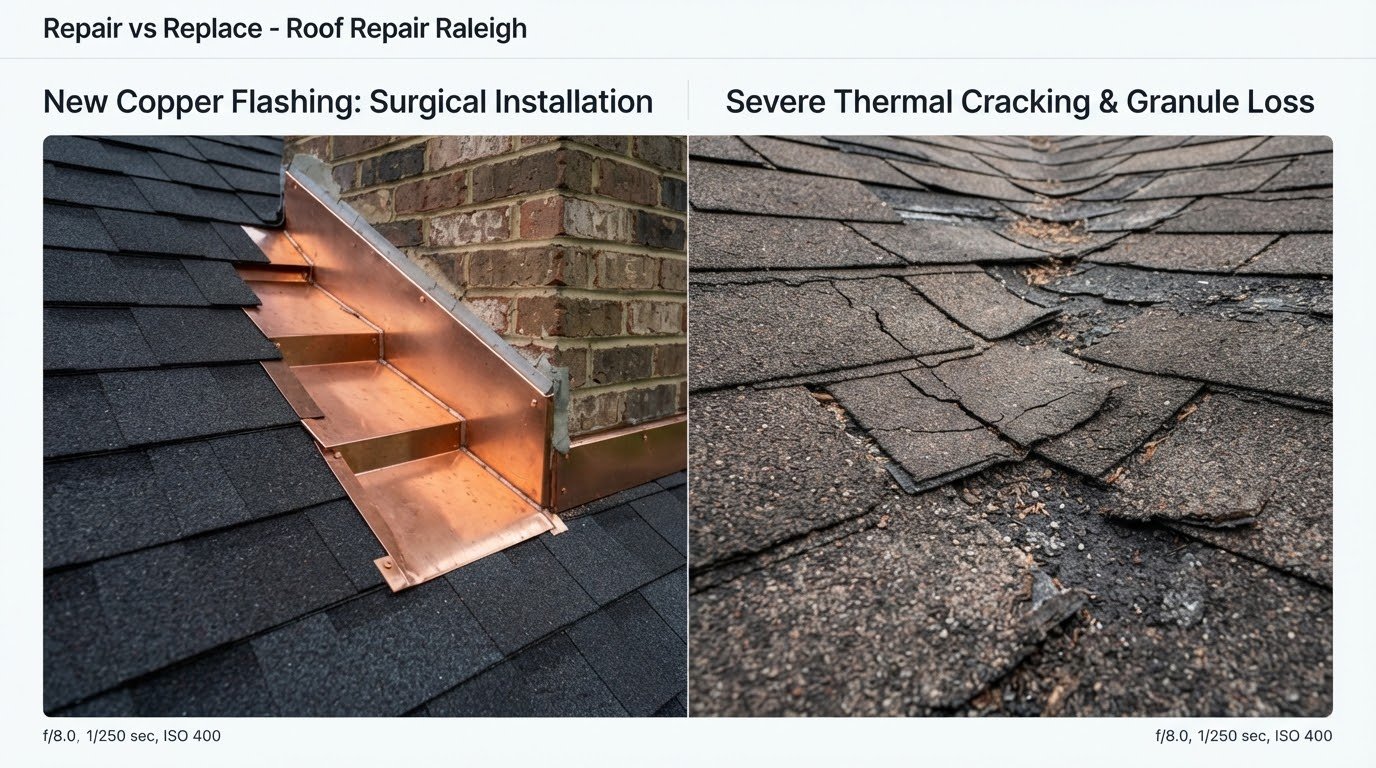
Fig 1.1: Surgical step-flashing repair (left) versus structural asphalt mat failure (right) on a 17-year-old roof in Cary, NC. Notice how the brittle mat cracks under mechanical fastening.
Our licensed Wake County project managers perform photographic brittleness tests and attic moisture scans without high-pressure sales tactics.
The 50% Rule and Break-Even Math
When weighing repair bills against the price of a total roof system replacement, experienced roofing estimators use an actuarial formula commonly known as the Roof Life-Cost Index:
The 50% Financial Rule of Thumb
Standard formula used by Wake County property managers
A 7-year-old roof with a $650 valley leak. ($650 × 7 = $4,550). A full replacement is $12,000 (half is $6,000). Because $4,550 is less than $6,000, repair is financially sound.
An 18-year-old roof requiring $1,400 in flashing and pipe fixes. ($1,400 × 18 = $25,200). This vastly exceeds half the replacement value. Every repair dollar is wasted.
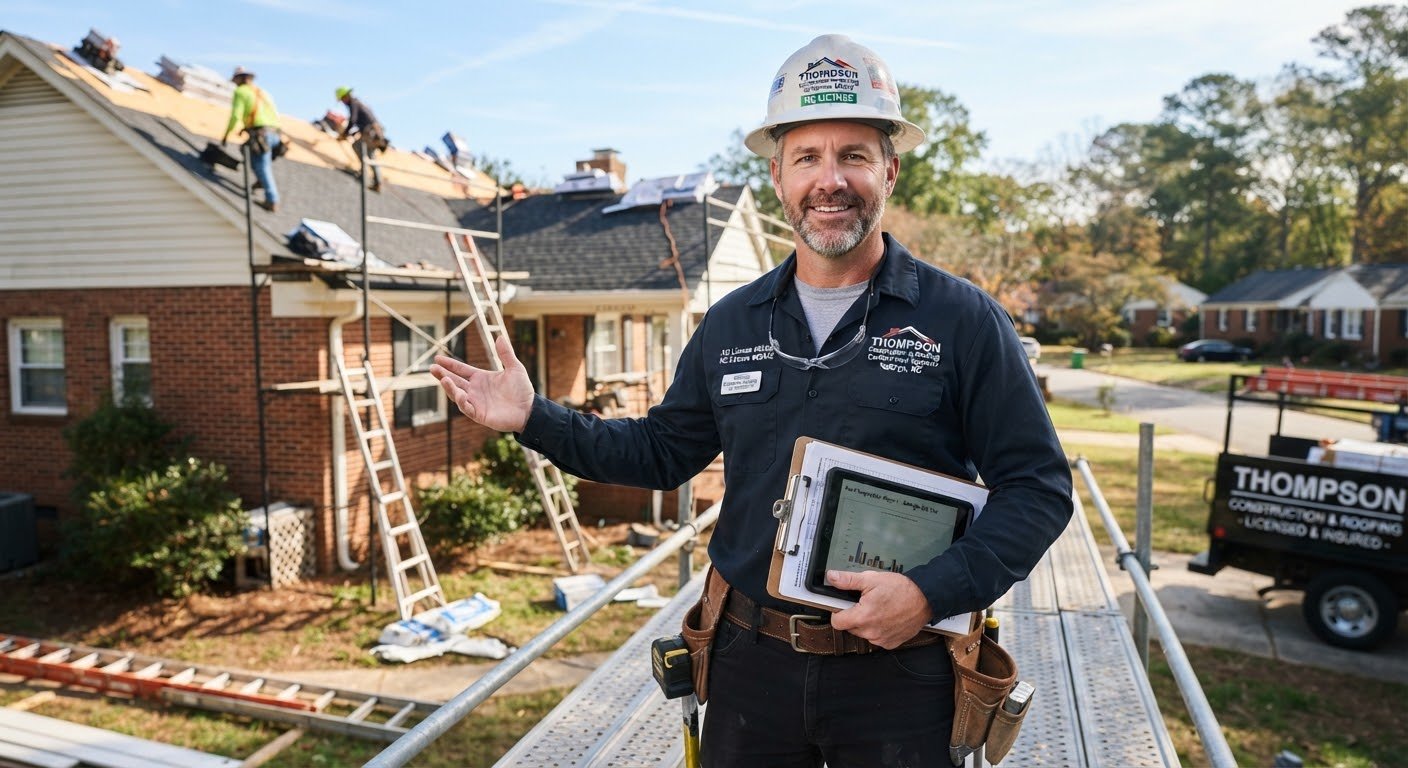
Marcus Vance, Lead Roofing Forensic Specialist
Marcus has supervised over 2,800 roof diagnostic inspections across Raleigh, Cary, and Wake Forest during his 18-year construction career. Certified by the Roofing Consultants Institute (RCI) and Haag Global, he specializes in storm forensic damage documentation and microclimate moisture mitigation.
- North Carolina State Building Code: Residential Code (NCRC 2018/2024 update), Section R908 (Reroofing).
- National Roofing Contractors Association (NRCA) Guidelines for Asphalt Shingle Maintenance & Repair Protocols.
- ASTM D3462: Standard Specification for Asphalt Shingles Made from Glass Felt and Surfaced with Mineral Granules.
Common Questions on Raleigh Roof Repair vs. Replacement
Can I replace just one slope or facet of my roof in Raleigh?
What is the realistic average lifespan of architectural shingles in Wake County?
How can I test if my shingles are too brittle for repair without damaging them?
Does homeowners insurance pay for repair or replacement after storms?
Will a full replacement lower my summer cooling bills in Wake County?
Related Raleigh Roofing Guides
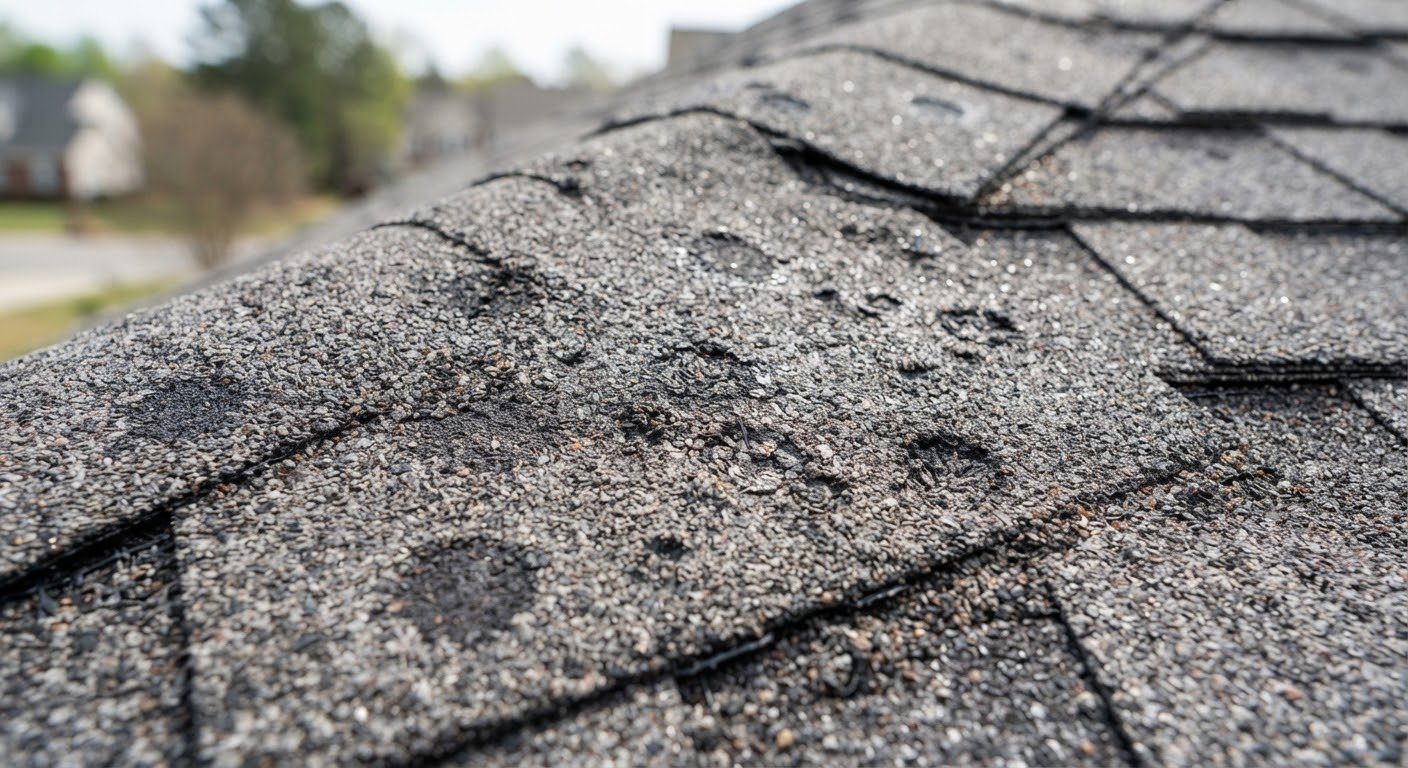
How to Spot Hail Damage on a Raleigh Roof
Learn how Haag-certified inspectors differentiate cosmetic discoloration from structural mat failure after Triangle storms.
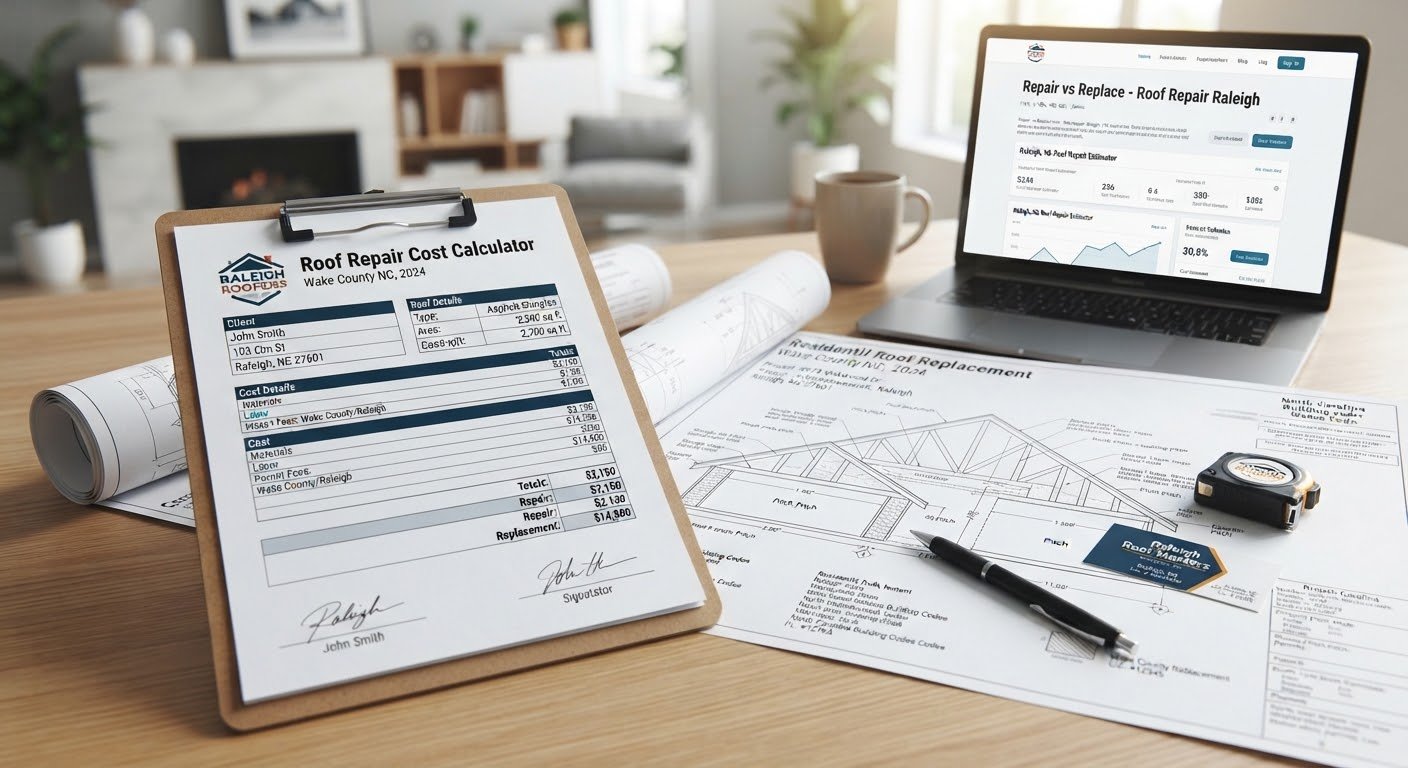
How Much Does Roof Repair Cost in Raleigh? (2025)
Transparent, unvarnished price ranges for chimney flashing, pipe collars, structural valley rebuilds, and emergency tarping.
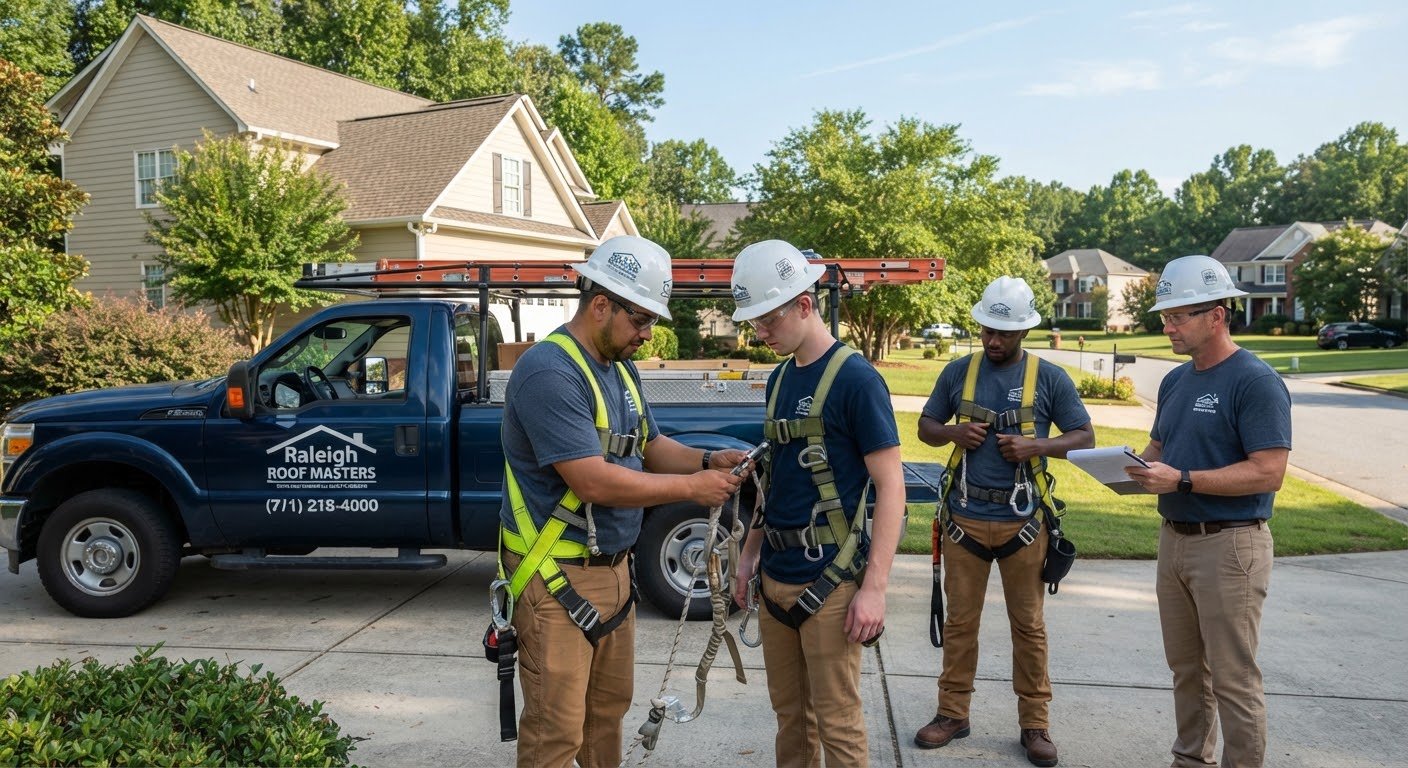
How to Choose a Roofer in Raleigh: 12-Point Checklist
Verify general liability policies, North Carolina license classifications, and avoid door-to-door storm-chasing operators.