Hurricane Season Roof Checklist for Raleigh
David Vance, Master Roofer
30+ Yrs Piedmont Field Specialist
Technical Review
Mark Callahan, Lic. NC-GC-78421
Published
June 1, 2025 · 8 min read
Raleigh faces severe tropical storm feeder bands and inland hurricane forces (June 1 – Nov 30). Preparing your roof requires a dual-phase protocol: pre-storm inspection of shingle adhesion, perimeter drip flashing, and oak canopy clearance, followed by immediate post-storm forensic photo documentation and emergency tarping if wind shears underlayment.
Printable Raleigh Hurricane Storm Checklist
Validated protocols for Wake County properties during active Atlantic tropical warnings.
Phase 1: Pre-Storm (June–August)
Perform these preventative checks before tropical low systems reach North Carolina coastline.
Phase 2: Post-Storm (First 24–48 Hrs)
Execute immediately once local Wake County emergency management clears high winds.
Understanding Raleigh’s Inland Hurricane Vulnerability
While coastal barrier communities like Wrightsville Beach or the Outer Banks endure violent ocean surges, Wake County faces a distinctly deceptive set of meteorological dynamics. By the time Atlantic tropical depressions track 120 miles inland across the Coastal Plain to the Piedmont, forward translational speed slows, often dropping 8 to 15 inches of rain over 36 hours accompanied by severe cyclonic feeder bands.
Raleigh’s topography is blanketed by mature loblolly pines and century-old willow oaks. In neighborhoods such as Five Points, Hayes Barton, Cameron Park, and North Hills, soil saturation quickly destabilizes root networks. When sustained 50–70 mph wind gusts torque heavy oak crowns, entire tree limbs shear off, fracturing roof trusses, crushing ridge rafters, and piercing plywood decking like matchsticks.
Timeline of Notable Raleigh Storm Disasters
Key storms that shaped North Carolina building codes and fortified roofing mandates.
Delivered sustained 90+ mph winds through Wake County, flattening thousands of structures and causing catastrophic widespread rafter blowouts across Raleigh’s oldest residential framing.
The benchmark Triangle catastrophe. Fran knocked over an estimated 40% of Raleigh's mature oak trees, crushing roofs from West Raleigh to Historic Oakwood and causing over $5 Billion across NC.
Historic deluges overwhelmed low-slope seams and flashings. Valleystrips and undersized gutters backed moisture into eave decking, causing chronic wood rot throughout Eastern Wake County.
Sustained driving horizontal rains penetrated unsealed plastic ridge vents and compromised masonry chimney saddles, producing pervasive drywall leaks across Cary, Apex, and Raleigh.
Localized microburst activity demonstrated that 3-tab shingles consistently fail at 60 mph, whereas properly fastened architectural shingles with enhanced nailing survive undamaged.
5 Critical Roof Vulnerabilities Before Tropical Storms
When wind speeds escalate past 50 mph, pressure differentials exploit subtle mechanical oversights. The vast majority of insurance payouts in Wake County stem not from complete structural roof displacement, but from water ingress at five predictable weak points:
Closed-cut valleys choked with loblolly pine needles create an organic sponge. Rainwater backs up sideways beneath shingle overlaps rather than shedding freely down the valley axis.
Piedmont UV heat bakes standard rubber plumbing boots within 6 to 8 years. The resulting hairline fractures allow driven hurricane water to stream directly down plumbing stacks into bathroom ceilings.
Cheap unbaffled ridge vents permit sideways gusting rain to blow backward into attic ventilation slots, saturating blown cellulose ceiling insulation across the length of the ridge beam.
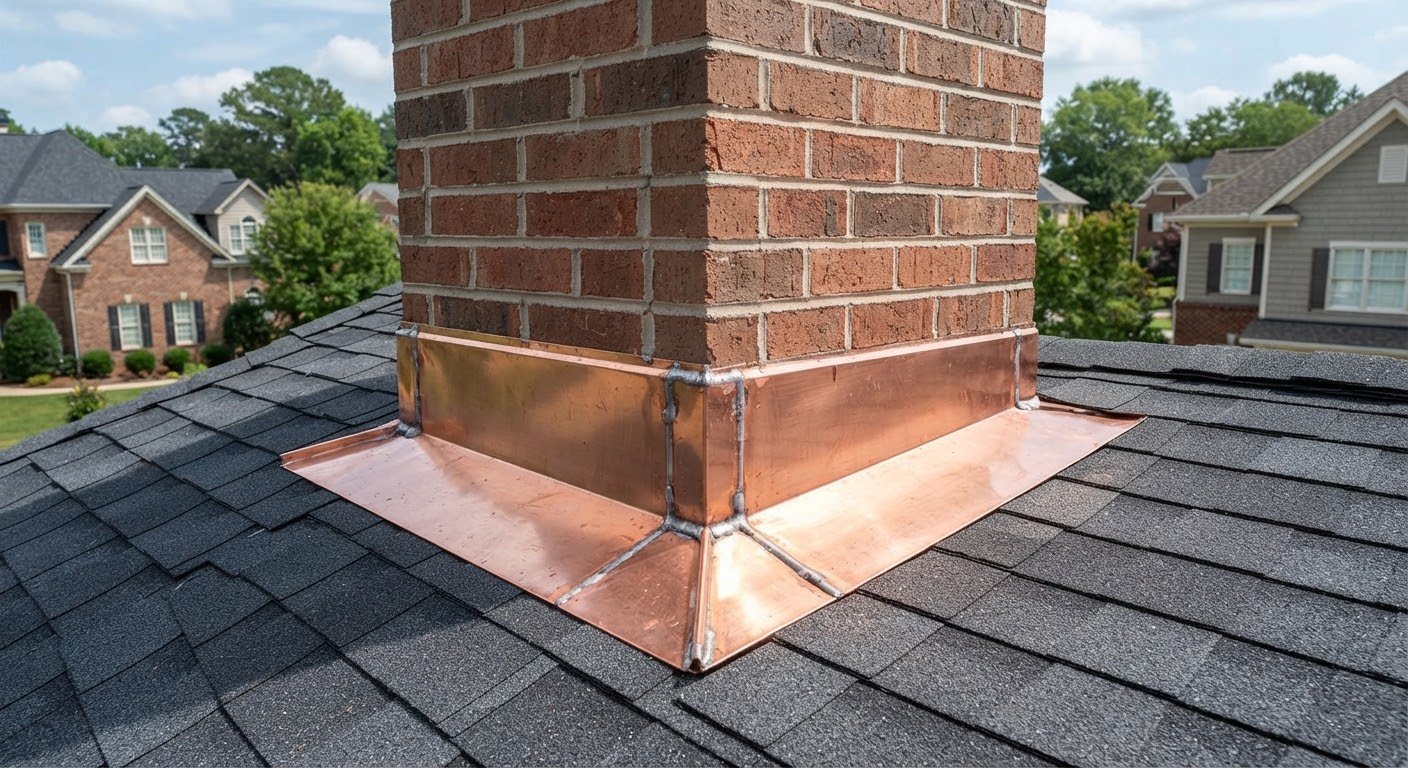
Masonry chimneys on upslope pitches require custom copper or galvanized crickets (saddles). Without an intact diverter, water cascades against failing counter-flashing mortar joints.
If starter shingles were nailed without manufacturer edge sealant or if the perimeter drip edge is fastened sparsely, 70+ mph head-winds pry up the leading perimeter course, peeling the entire roof plane like a sardine can.
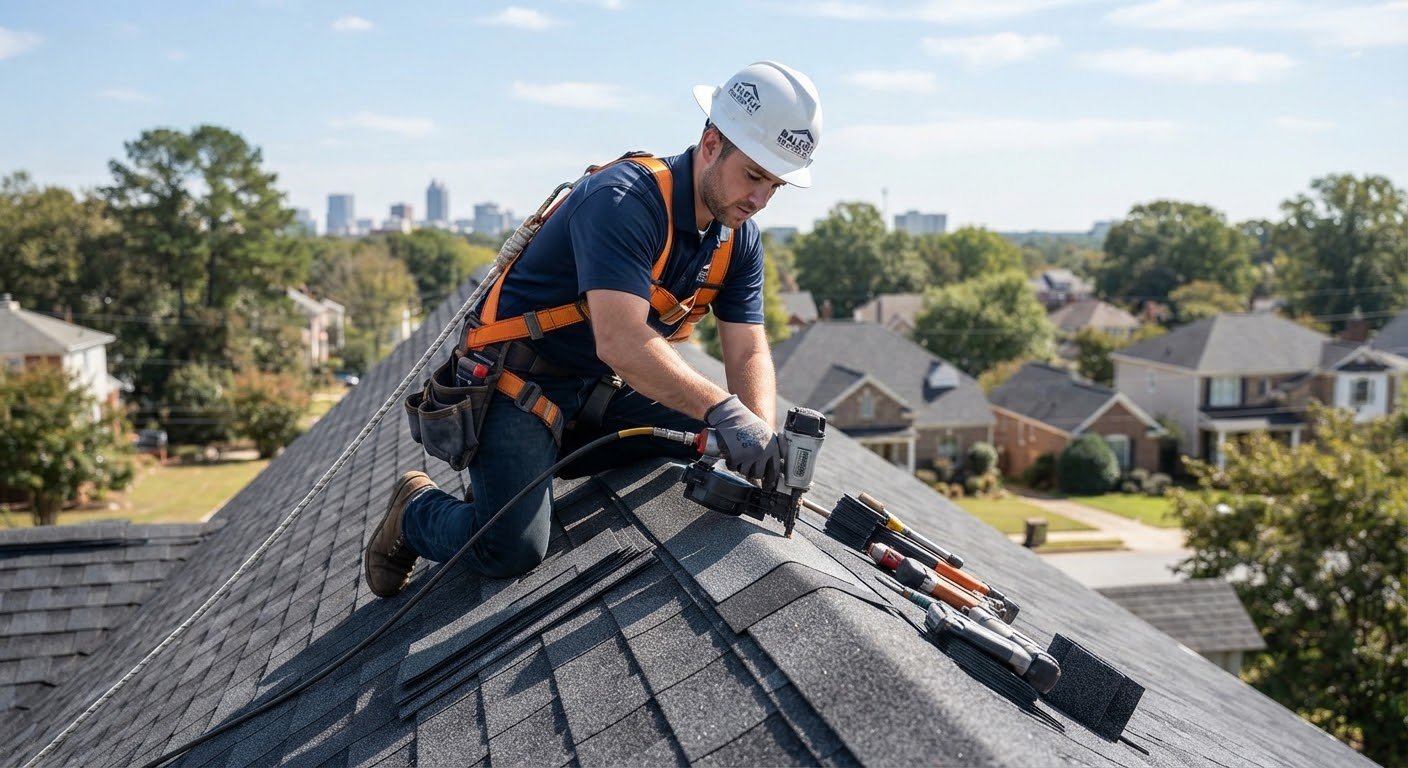
Consumer Alert: Storm-Chaser Roof Scams in Wake County
Within 48 hours of a named storm making North Carolina landfall, predatory out-of-state roofing crews flood Wake, Durham, and Johnston counties. Never sign an "Assignment of Benefits" or authorize immediate work without checking for an active NC General Contractor Roofing License (NC-GC), local physical references, and proof of $2,000,000+ general liability insurance.
Active Leaks or Downed Trees on Your Roof?
Our licensed emergency dispatch arrives with industrial tarps, lumber, and structural seals.
Standard Code vs. 130 MPH Fortified Details
How our certified repair specs resist inland cyclonic wind shear compared to basic residential construction.
Raleigh Homeowner Hurricane FAQs
How fast can your emergency roofing crew respond after a hurricane in Raleigh?
Will insurance cover tarping costs after a storm?
How do I know if my shingles lifted without walking on the roof?
What is the difference between architectural shingles and 3-tab in hurricane conditions?
Do I need a city permit for storm repairs in Raleigh?
David Vance
David has overseen over 3,800 roof restorations across Wake, Durham, and Orange counties over 30 years. He works directly with forensic engineers, city code enforcement, and insurance adjusters to ensure residential installations survive Piedmont storm seasons.
Related Storm & Maintenance Guides
Should You Repair or Replace Your Raleigh Roof?
Analyze shingle age, valley decay, and storm loss metrics to make an informed financial decision.
How to Choose a Roofer in Raleigh
Crucial credentials to check: NC Licensing Board standing, local physical address, and liability policies.
Roofing Permits in Raleigh, Explained
Everything homeowners need to know about Wake County municipal inspections and RHDC guidelines.